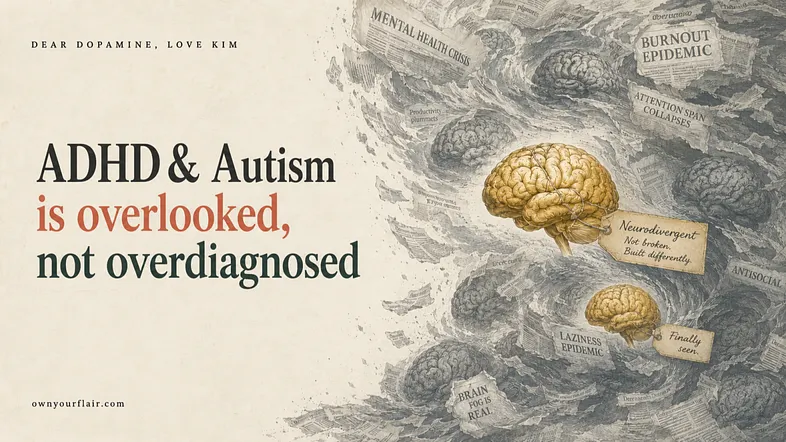
ADHD & Autism is overlooked, not overdiagnosed

The headlines are panicking about overdiagnosis. The real question is how we support the late-diagnosed
Dear Dopamine-curious friends
If you’ve seen the news/social media posts in the last few months, you’ll have seen the panic: ADHD and autism diagnoses are soaring, especially among young people, and cue everyone clutching their pearls about whether half the country is making it up. I finally sat down and read through the Fonagy Review (the government’s independent review into mental health, ADHD and autism), and honestly? Its conclusions say exactly what I’ve been banging on about for years.
The panic misses the point (as usual)
Here’s the bit that didn’t make the front pages: underlying prevalence has stayed broadly stable. What’s actually risen is referrals… because more conversations and more awareness mean more people going, “hang on… does this explain my whole life?” and seeking an assessment.
And who’s driving that increase? Largely women and young people. Which makes complete sense when you know that neurodivergence has been severely underdiagnosed in women, non-binary folks and other minority groups for decades. We weren’t absent. We were missed.
So instead of panicking, or quietly implying that a generation of people are lying about their own brains, can we refocus on the actual question? How do we support more late-diagnosed neurodivergent people to help their mental health and employment?
What bottom-up advocacy actually looks like
Recently I delivered a 3-hour neurodiversity and manager training session at Moët Hennessy, in their office.
Here’s how it happened, because I love this story. Claudia, a neurodivergent employee there, had been following me on LinkedIn for a while. She reached out because she was working to set up the neurodiversity employee resource group at her organisation. We hopped on a call, decided to pitch training to the HR team… and three months later I was standing in their office delivering the talk.
That’s the power of bottom-up advocacy. If you’re inside an organisation and you care about neurodiversity, you don’t have to wait for permission from the top… you can make things happen. 👉 If you need help having these conversations at work, reach out, that’s genuinely one of my favourite things to help with.
Press enter or click to view image in full size
I turned my coaching brain into a chatbot
I’ve built something I’m quite excited about: an AI chatbot trained on my own coaching frameworks.
It came from a very simple realisation. As a coach, I kept hearing my late-diagnosed ADHD and AuDHD clients say the same things, over and over. So I took my anonymised and coded client transcripts, drew out the frameworks and patterns hiding inside them, and built a chatbot that addresses the issues that come up most in my practice, in my coaching style, referencing the tools I actually use.
It’s in beta, but I’d love for you to have a play and tell me what you think.
Pick my ADHD brain… now available 24/7 and never distracted mid-sentence
🤝 How I can help
🎤 Lunch & Learn: a 60–90 minute awareness session for your whole team on neurodiversity in the workplace. Great starting point for any organisation. DM me to chat about booking one in.
🏆 Neurodiversity Manager Training: CPD certified, 3 hours, built for managers and leadership who want to actually get it right when supporting neurodivergent team members. Get in touch to find out more.
🧠 Flairya: my neurotech platform for neuroinclusion at work, currently in beta. If you’re part of an ERG or HR team and want early access, message me, I’d love to have you testing it.
🎓 Coaching Neurodivergent Clients: a CPD certified, self-paced course for coaches, mentors and managers who want to support neurodivergent people properly. Drop me a message for details.
Wishing you lots of dopamine, Kim 💛

An ADHD coach. Diagnosed with Dyslexia and ADHD late in life. I write about neurodiversity, mental health, and entrepreneurship.